



By Nancy Stratman
NDA Archivist
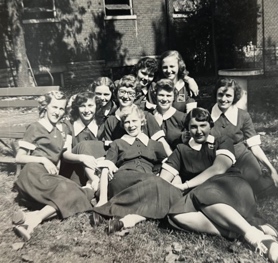
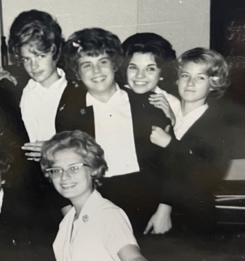
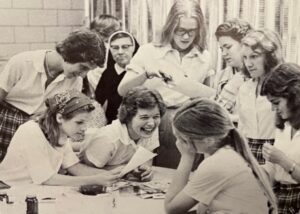
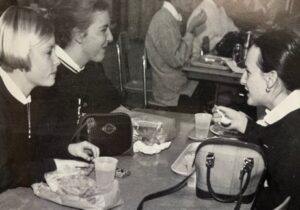
Sisterhood is commonly defined as the unique bond of affection, loyalty and support shared among women. The idea typically transcends the notion of a simple friendship but is instead defined as providing a foundation of mutual empowerment, shared experiences and a commitment to uplifting one another. It involves celebrating and championing each other’s successes, providing comfort and support during failures, and fostering an environment where women help one another flourish and succeed. It unites individuals based on common backgrounds, interests and challenges, as well as creating an unspoken understanding and a sense of belonging, not just for the present but throughout decades.
1928
1939
1940
1951
1964
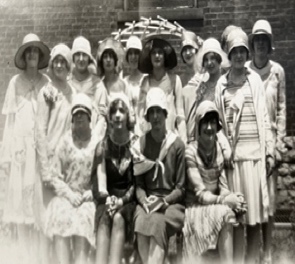
At Notre Dame Academy, our sisterhood has stood strong for over 120 years. Beginning in September 1906, six young women came together and laid the groundwork for “Notre Dame Academy High School,” under the leadership of Sr. Mary Agnetis, principal of the Academy for over 40 years. The four-year Scientific Program included classes in Religion, Latin, English, Ancient and Modern History, Mathematics and several Modern Languages. A two-year Commerce Program grew out of the occasional business classes that had been offered to students in the 8th and 9th grades. This program offered classes in Business English, Typewriting, Bookkeeping and Shorthand. However, no matter which educational program a young lady undertook, the awareness of sisterhood provided a bond of inclusiveness that stretched beyond the classroom years. Led by Sr. Mary Agnetis, students experienced a special bond of piety, scholarship and Christian womanhood she felt vital that each girl achieve. And through these common bonds, a sense of sisterhood that transcended the four years of classroom education.
1970’s

1986
1996
During this anniversary year, the Notre Damian will feature a pictorial timeline of 120 years of sisterhood traditions which have shaped the heart, soul and intellect of every student who has walked the hallways of 5th Street and Hilton Drive. This issue will center on the importance of faith formation and many of the daily school events which have become traditions of sisterhood. Future issues will center on academics, athletics, fine arts, alumnae, fundraising and campus growth. We welcome your comments and participation in our timeline history.

Faith Formation
From the first day of classes in September 1906, Sr. Mary Agnetis used her own core beliefs to lay the foundation for spiritual growth and faith formation as a central pillar of the education that each student would receive at Notre Dame. Under her leadership, the school chapel offered students a place for the celebration of Mass with their classmates, as well as a quiet, reflective space for private prayer and reflection. School-wide masses were held across the street at Mother of God Church on a regular basis.
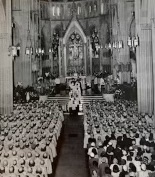
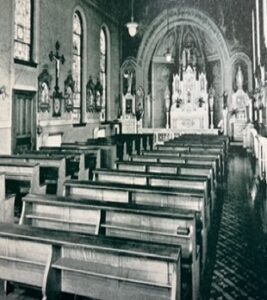
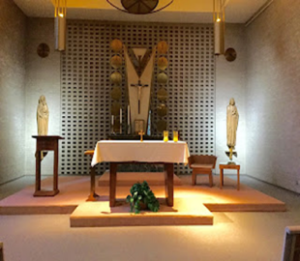
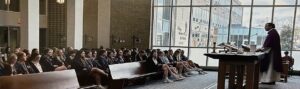
When the campus moved to Hilton Drive in 1964, the new chapel provided a similar sacred space for daily Mass, homeroom Masses and private prayer. At the start of the school year, Mass was often celebrated outside on the hill south of the auditorium or in case of rain, moved to the spacious auditorium. The front courtyard is still often used as a gathering space for students and alumnae to pray the rosary.
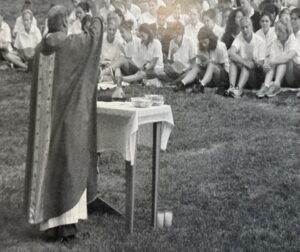
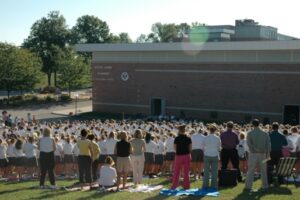
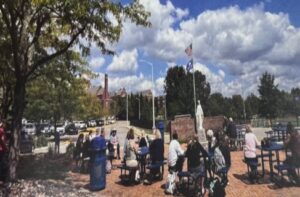
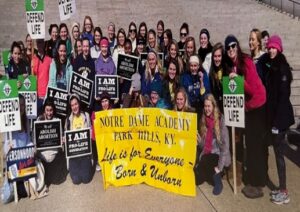
In 2019 the original chapel was remodeled and expanded so that an entire class could celebrate Mass together, as well as provide more quiet, reflective spaces for individual prayer. Today it is not unusual for club members and sports teams to gather in the chapel to celebrate Mass before the start of each season, a competitive match, the opening of an arts event or to receive a blessing before leaving for school trips, such as the annual March for Life demonstration.
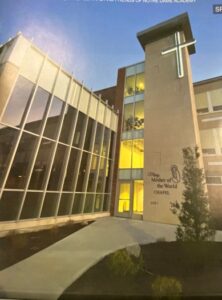
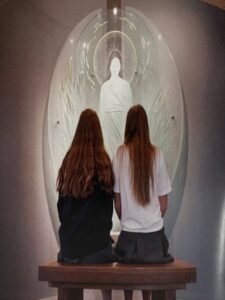
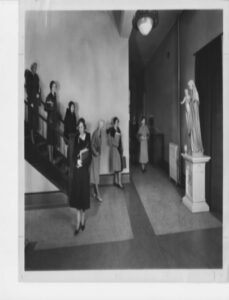
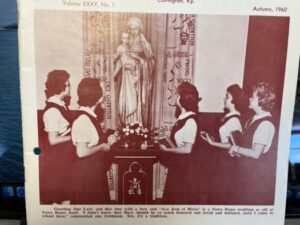
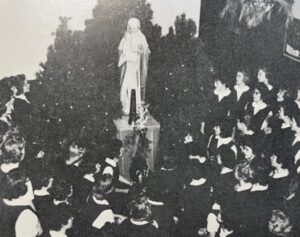
As patroness of the school, the honor of Mary has always held a special place in many of the activities at Notre Dame. From the opening day of classes in 1906, students on the 5th Street campus would bow before the statue of Mary in the main foyer every morning with “Ave Jesu et Maria” and ask for Mary’s blessings and guidance for the day.
 .
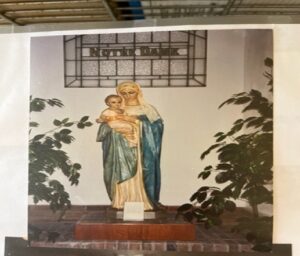
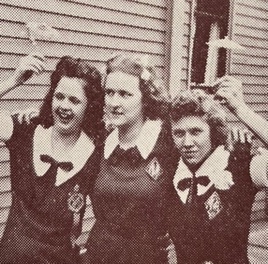
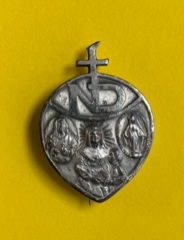
After the move to the Hilton Drive campus, a statue of Mary stands at each entrance to greet every student. The Feast of the Immaculate Conception in December became a yearly commemoration of the life of Mary as well as a celebration of the importance of Mary in the daily lives of each student. During the 1940s and ’50s, a school pin was given to each new student to be worn on her uniform over her heart which honored St. Julie Billiart and her devotion to our Mother Mary, the Miraculous Medal and the Sacred Heart of Jesus. During the 1970s a new tradition started with all new students, faculty and staff receiving a Miraculous Medal to be worn as a sign of her devotion to Mary.
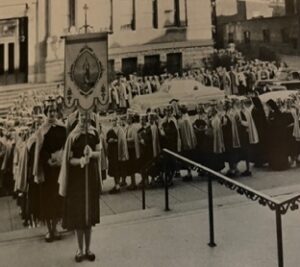
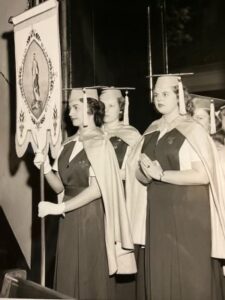
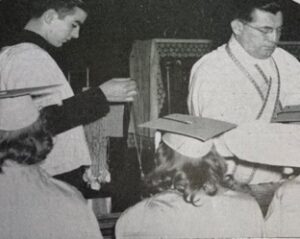
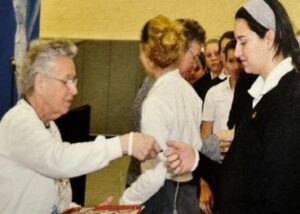
Between the early 1920s and well into the 1940s, students joined together during the month of May to celebrate the life of Mary in a series of daily, weekly and monthly devotions that allowed for personal prayer opportunities, the creation of classroom displays centered on events of Mary’s life, written essays centering on the influence of Mary in a student’s personal life and the celebration of Mass dedicated to our Virgin Mother. In May 1949, the first “official” May Crowning Mass was held in the school chapel. To determine who would hold the honor of crowning Our Lady, a contest was held to see which student could list the greatest number of pictures of the Madonna and the artists. Junior Mary Theis won the honor with her submission of 956 titles. She was escorted by the Crown Bearer, Jacquelyn Kroeger who came in second; the rest of court included six “Mary’s Maidens” and honor guard of two representatives from each senior homeroom.
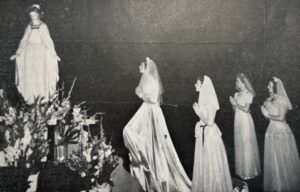 .
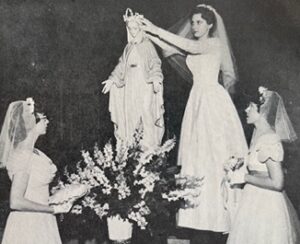
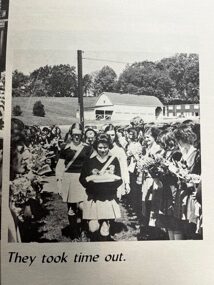
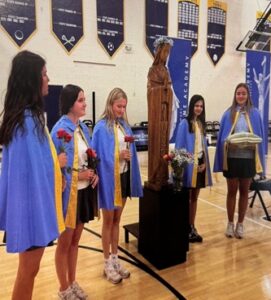
This tradition of crowning Mary has continued to the present day. After the move to the new campus, students competed for the honor of crowning the Blessed Virgin by participating in a test on Mariology. The test was sponsored by the Legion of Mary; the top scorer won the privilege of being named Mary’s Maid who crowned Mary. The top scorers from each class won the privilege of becoming members of Mary’s Court and all other participants, wearing honor caps and capes presented flowers during the service. Mary Ethel Parrot (more commonly known to hundreds of alums as Sr. Mary Ethel) won the privilege of being the last student to crown Mary on the 5th Street campus and the first student to crown Mary on the new Hilton campus.
Currently, students who wish to be considered as Mary’s Maid and attendants are asked to write a personal essay describing their personal devotion to Mary. All students gather together to rededicate their lives to Mary during the annual May Crowning ceremony, which is often the last schoolwide Mass of the academic year.
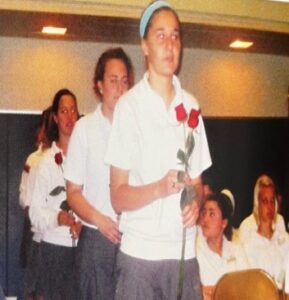
Also central to the core belief of faith formation is the attendance of all students in a yearly retreat. Started by Sr. Mary Agnetis in 1911, the retreat was an opportunity for the student body to gather together and reflect upon their faith and their role in the church. Throughout the years, the retreat programs have grown and now are divided into grade level retreats which offer students opportunities to deepen their individual faith, reflect on the pillars of the Sisters of Notre Dame, provide service to the community, to give in-depth study to different facets of the Catholic faith and to experience the many opportunities that are open to their discernment. Our current retreat programs include a multi-day Senior Retreat, Senior Mission Retreat (one day), Freshmen Retreat Day (Encountering Christ), Sophomore Retreat Day (Dedicated to Mary), and Junior Pilgrimage Retreat Day.
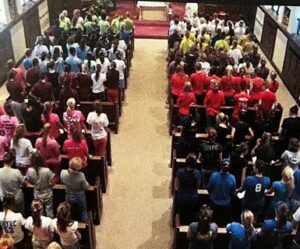

Quiet Reflection
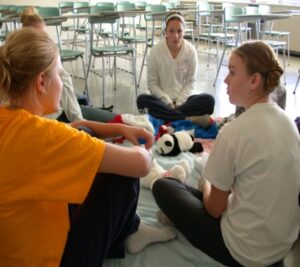
Small Group Discussions
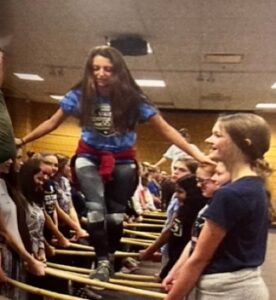
Team Building
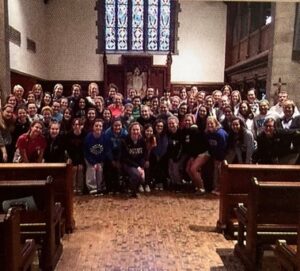
Sisterhood
SCHOOL TRADITIONS
Themes
It appears that from earliest high school students until the mid-1950s, each senior class chose a theme that united the members of that class. It started in 1910 with just a class motto, chosen by each class of graduates; “per aspera ostia”, which translates to “through hardships to the stars” was the motto for the 5 graduates in 1910. In 1917, each class added a class flower and class colors to their theme and by the late 1920s a class patron was added. These were quite common until the 1940s and appeared with the class picture in the Gavel and on the graduation program.
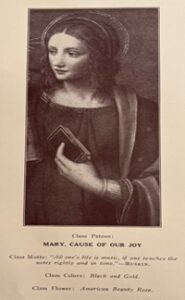
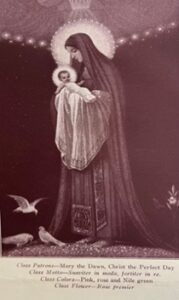
After the move to the Hilton Drive campus, a motto was chosen, which was introduced at the beginning of the year and then appeared on banners displayed at the Baccalaureate Mass and as the front cover of the graduation program. Some examples included
1971 “There aren’t any endings, only beginnings with more to start on…”
1977 “Live for Today, Learn from Yesterday, Dream of Tomorrow”
1986 “If you can imagine it, you can achieve it; if you can dream it, you can become it.”
1990 “Friends are friends forever.” (based on song by Michael W. Smith)
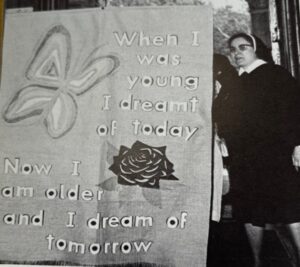
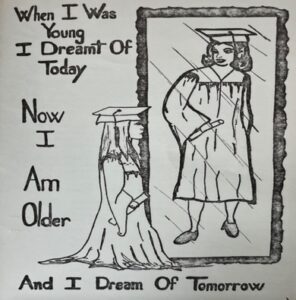
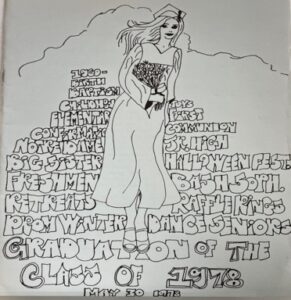
During the late 1990s throughout the early 2000s, the idea of a unifying senior class theme changed to include the entire student body. Most school themes during those years were based on a popular song of the day which was selected by members of student council and introduced at the opening assembly each year. Some examples include “Walking On Sunshine”, and “Don’t Stop Believin”.
Currently, the school theme is chosen by the Administration and Advancement Departments and is based on one of the four SND Educational Principles. Some examples include “Love God. Love Others, Change the World!” and “Discovering Our Purpose. Transforming the World.”
The theme for the current year is “Sisters in Mission: Becoming Women of Faith Who Learn, Lead, and Serve with Purpose.”


Uniforms
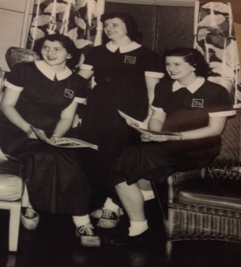
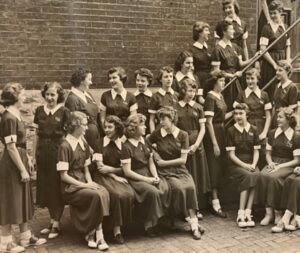
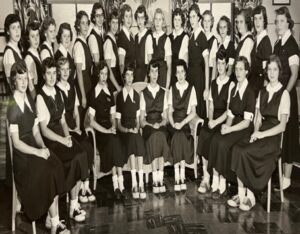
Many of our recent graduates will remember the quote “Sisterhood of the Gray Skirt”, which, of course, references the iconic gray uniform skirt that defined the look of every NDA student from the late 1960s to the present day. But for many of you who graduated from the 5th Street campus, you were probably more known as the “Sisterhood of the Blue Jumper” or even earlier, perhaps the “Sisterhood of the White Collar and Cuffs”.
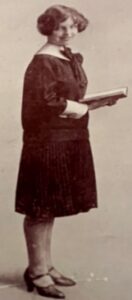
1920’s Winter
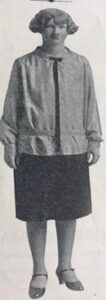
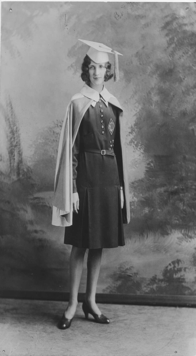
1920’s Summer
1940’s
1950’s
Whatever the era, Notre Dame students have always embraced a more traditional dress code which easily identified them as an academy student: it encouraged cleanliness as well as neatness and pride in one’s appearance, fostered a respect for the way in which a student presented herself to others, created a semiformal atmosphere needed to support a disciplined learning environment, and provided a uniform manner of dressing which helped minimize social differences that could arise among students.
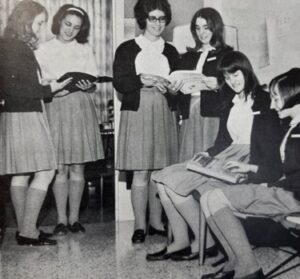 .
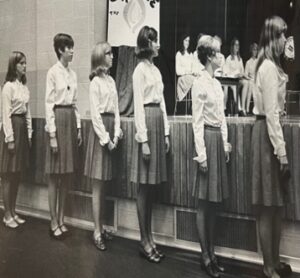
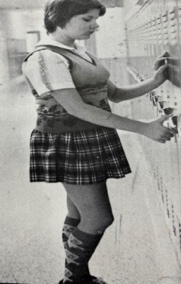
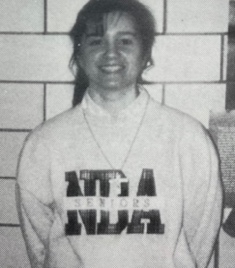
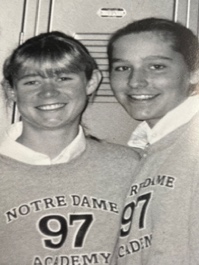
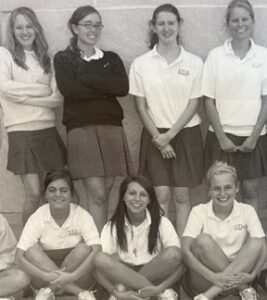
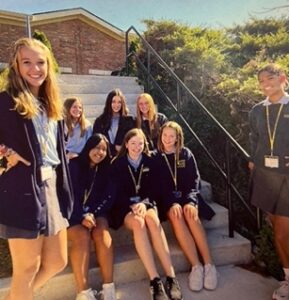
Uniform accessories, however, have changed with each decade. The blue jumpers required a button-down, white blouse with a rounded Peter Pan collar, while the gray skirts have been topped by a variety of blouses and tops. In the late 60s and early 70s, a white long sleeve button-down blouse was worn at first, but quickly changed to a short sleeve version. (Many of you might remember the hassles of keeping your blouse tucked into the skirt or having no way to “hide” the rolled-up waistband!) Also, in the late 1960s an “assembly blouse” was added to the standard uniform to be worn for school assemblies and special occasions. This blouse was a long-sleeved white blouse with lace ruffles down the bodice and on the cuffs. During the mid-1970s a plaid skirt was added for two years due to a fabric shortage which had been used for the grey skirts. During the 1970s and 1980s, any type and color of sweater was allowed as long as the white school blouse was also worn.
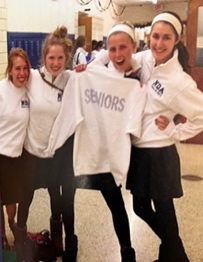
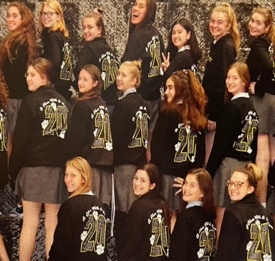

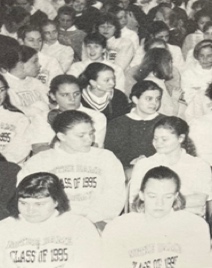
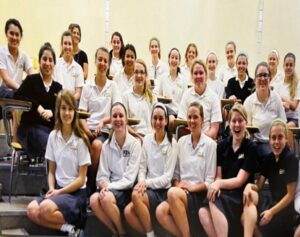
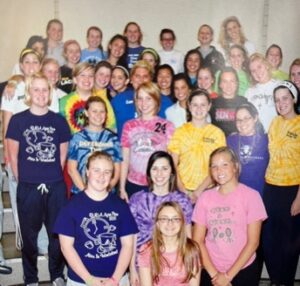
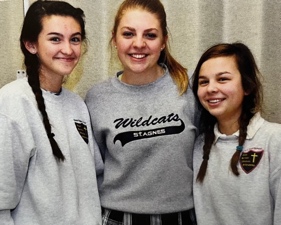
In 1992, seniors were given the opportunity to create their own “senior sweatshirt”, unique to their class. This is a tradition that has now become synonymous with the beginning of senior privileges. Today’s students have a choice of a white or light blue banded Notre Dame Academy polo shirt, which is often accompanied by a navy pullover or cardigan sweater or a navy-blue crew or quarter-zip sweatshirt or fleece. On Fridays and special occasions, today’s student can also pair her gray skirt with a “spirit wear” t-shirt.
Spirit
Throughout the decades, Notre Dame students have always come together to celebrate that unique spirit that sets them apart from any other school. Greeting each student with high-fives and hugs on the first day of classes until the last senior has exited the auditorium to cheers of affirmation and clapping from the entire student body, our students have always exhibited a “spirit that makes a difference”!
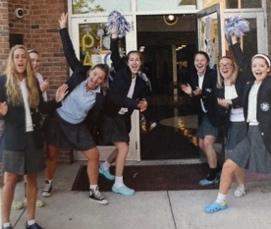

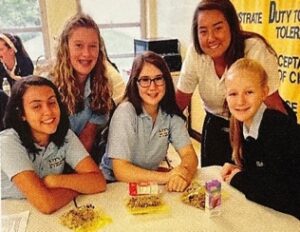
For many years, seniors would pair up with an incoming freshman prior to the opening of the school year to help guide them through the transition to high school and provide a friend and mentor throughout the year.
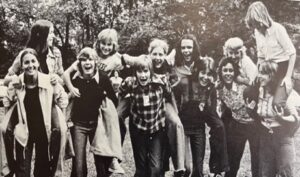
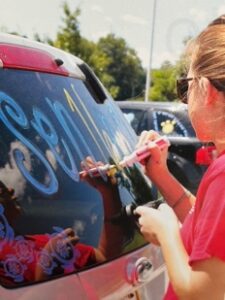
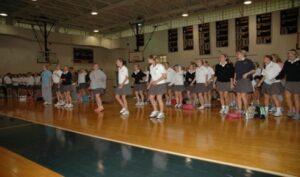
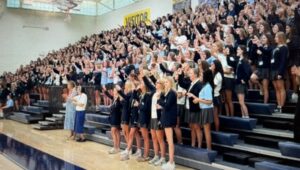
After the move to the Hilton Drive campus and continuing to the present, the first day of classes features members of the senior class proudly painting their graduation year on their cars, student council and class officers at the front doors welcoming each student and then leading a schoolwide assembly to introduce new faculty and staff, review guidelines for the new year, perhaps introduce the theme for the school year and give an overview of planned activities so that everyone would feel comfortable and excited about the new year. Freshmen and new students were introduced to the school song and learned the most popular of the school cheers used by student council and the sports teams. Even years after graduation, alums attending class reunions are heard singing in unison “NDA, We Honor Thee” and adapting the ever popular “Shimmerie, Shimmerah” cheer to end with “We are alumnae, Ha! Ha! Ha!”. In more recent years, an orientation assembly was held to introduce freshmen and new students to the myriad of clubs and extracurricular activities offered for membership. Club members often used skits, videos, song and dance to entice new members to join.

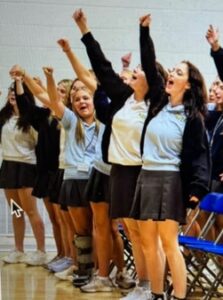
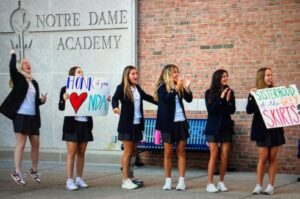
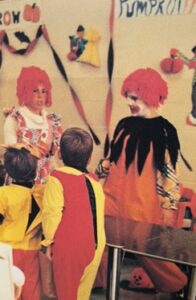
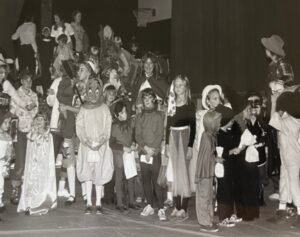
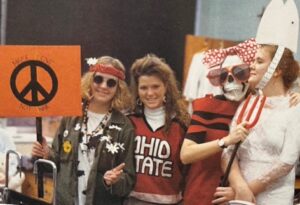
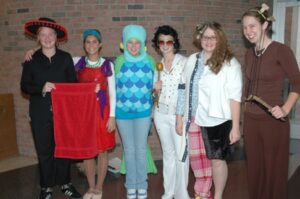
From the earliest years of the high school until now, Halloween, Thanksgiving and Christmas have always been celebrated with a spirit of joy, amusement and sisterhood. At the 5th Street campus, Halloween was celebrated with class-level parties for the juniors and seniors, as the sophomore “initiated” the freshmen into Notre Dame life with contests, good natured activities and refreshments. For many years at the Hilton campus, freshman students hosted a Halloween party for grade school children featuring costumes, games and treats for the youngsters. Grade level costume contests have always lent a fun and exciting atmosphere to the school day.
 .

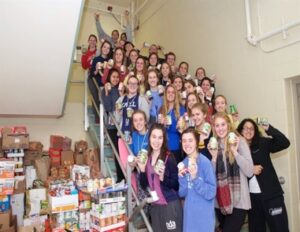
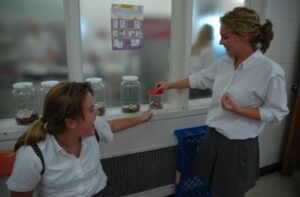
Paper drives, penny wars and food collections have always displayed the spirit of giving and gratefulness found within the Thanksgiving celebration.
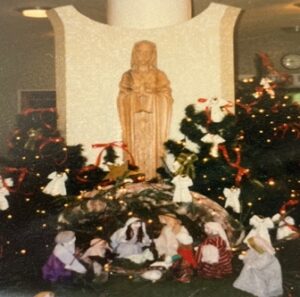
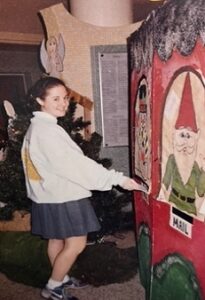
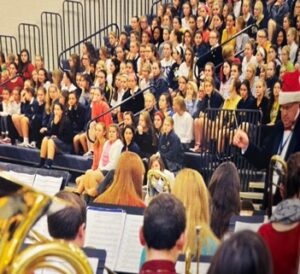
On the 5th Street campus, the spirit of Christmas was always found in the “secret Santa” activities between homerooms, concerts by the school band and glee clubs and gathering around the decorated fir tree in the main lobby to sing songs celebrating the birth of Christ.
Many of these same traditions have carried over to the Hilton campus. A decorated tree stands proudly in the main entrance lobby, homeroom decorating contests add a festive cheer to the weeks before break, concerts and sing-a-longs bring the student body together and in recognition of the giving spirit, collections of toys for children and household goods for families often fill the lobby with an abundance stacks of gifts.
 .

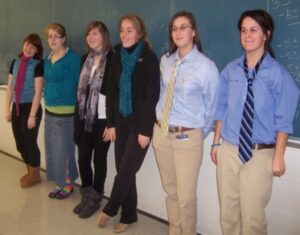
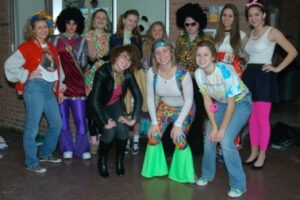
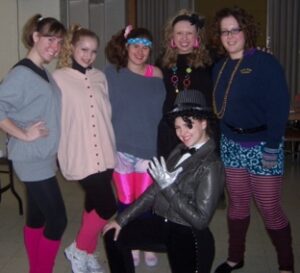
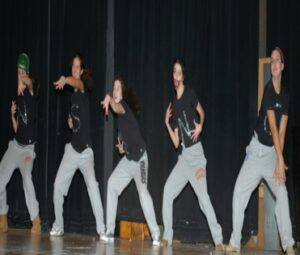
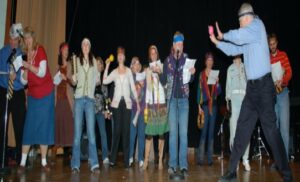
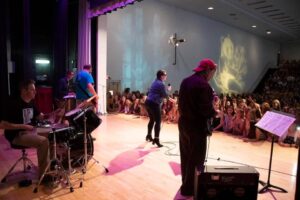
Since 1975, Catholic Schools Week, which is celebrated the last week of January, has brought the students together to joyfully celebrate the various aspects of a Catholic education. Since the late 1990s, special “theme” days such as “Nunday Monday, Grade School Days, Disney Delights, Dress like a Teacher and Decade Day were introduced to highlight the enduring impact of the Sisters of Notre Dame, the influence of the grade schools on their journey to NDA, the inspiration of the faculty and current cultural trends. Throughout the years, on the last day of the weeklong celebration, students have been treated to a student talent show, a faculty dance party and a mini concert by the “faculty band” to highlight just a few of the many activities.
Rings
The school ring has been a symbol of class unity and pride in Notre Dame Academy throughout the years. By 1921, seniors designed and voted upon a class ring, that would be worn during their last months as a student. In the 1930s, the selection of a class ring was moved to the start of the junior year. Wearing their honor caps and capes, juniors received their rings during a benediction service and then hosted a reception for their parents afterwards. Each class was able to design their own ring. By 1952, a new ring design was established, featuring the NDA Coat of Arms over a navy-blue stone, becoming the official school ring. For those juniors who chose not to purchase the official school ring, a medallion or charm was given as a symbol of class unity. By 2008, the distribution of a school ring had moved to the beginning of the sophomore year, so that the student could wear their ring throughout most of their student years.
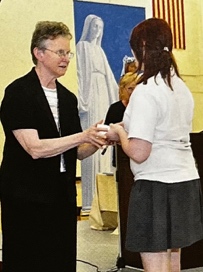
2013 Ring Ceremony
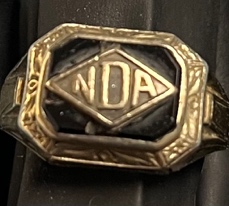
1928
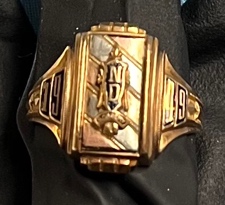
1949

1963
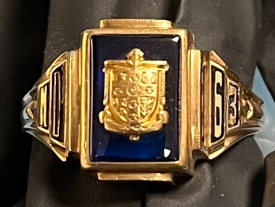
1980
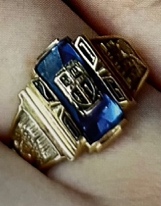
current
Dances
Like all teenage girls, NDA students enjoyed attending dances that were held periodically at the local Knights of Columbus halls, but there did not seem to be any school sponsored events until the 1940-41 academic year. In February of 1941, the NDA Press Club sponsored the “Press-ident “Club Dance in the school auditorium with proceeds going to a publication of a Senior Souvenir Book and then in April, the Alpha Beta Kappa sorority sponsored a dance at the Covington Knights of Columbus Hall. However, by the Fall of that year, our annals identify several dances that were held throughout the school including the Press-ident Club dance, a Victory Valentine Dance and the first mention of a school sponsored prom.
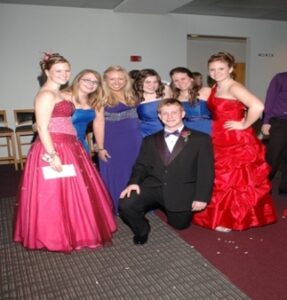
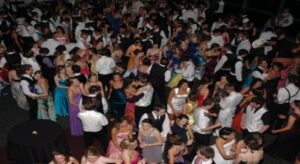
Although student council often sponsored school mixers at the start of each year, for many years there were only two school sponsored dances during the year; the first “official dance” of the school year was Silver Bells, a semiformal dance hosted by the Sophomore Class and open to all except freshman.
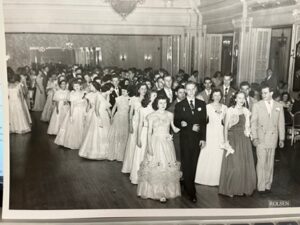
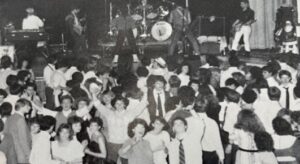
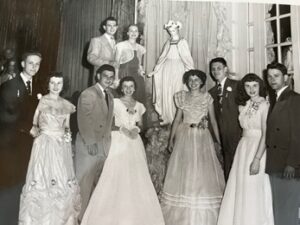

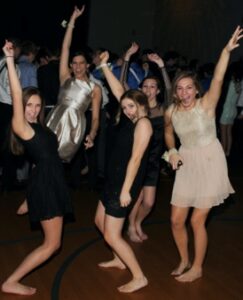
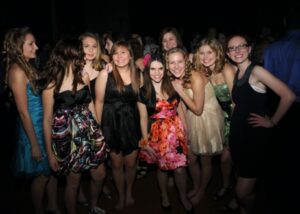
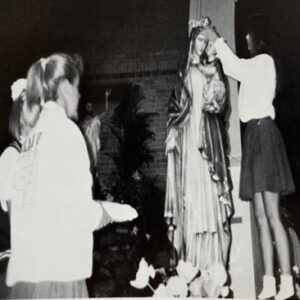
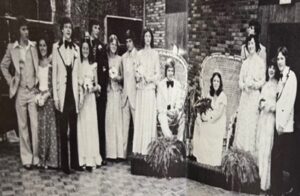
The second, of course, being the Junior-Senior Prom held at the end of the school year (for several years, two different proms were held- one for juniors and a different one for seniors). For many years, well into the 1970s, a “prom princess” and her court was selected from the senior class (the title “princess” was used because Mary is always our “queen”). Each prom started with the prom princess and her date crowning a statue of Mary while the entire gathering sang “Mother Beloved” as a dedication to Mary. During more recent years, the seniors still elect a prom princess, but now the juniors also elect a “prom duchess” as prom dignitaries.


Mother/Daughter Activity/Dance
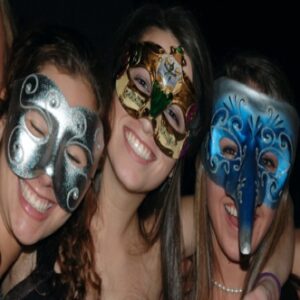
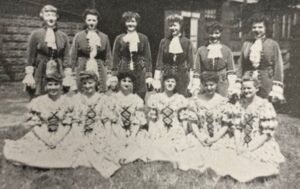
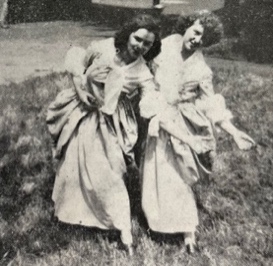
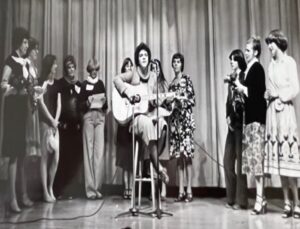
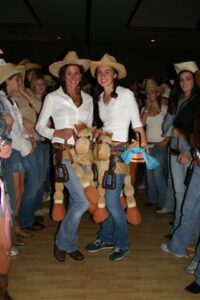
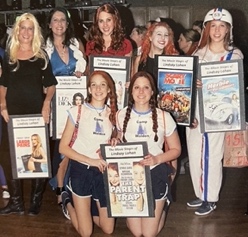
In May of 1932, a new extracurricular activity was begun at NDA, a Mother’s Day program. Each mother or guardian of a student was invited to attend a program honoring their moms. The program included songs and recitations by the students, followed by Benediction in the chapel and then refreshments in the cafeteria. Each student then presented their mother with a spiritual bouquet. In 1933, a luncheon was added. In the ensuing years, the mother/daughter event encompassed a variety of activities including luncheons, craft activities, sports themed contests, fashion shows, Masses and concerts. In more recent years, the celebration of mothers and daughters has centered on a costumed dance and dinner where students and their mothers rock the night away celebrating the bonds of sisterhood.

Father/Daughter Dance
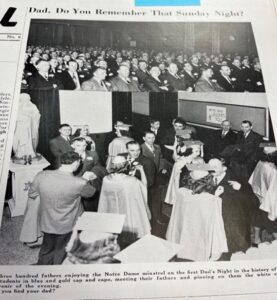
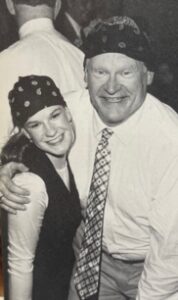
In March of 1948, the first “Dad’s Night” was inaugurated on Catholic Father’s Day, which celebrated the life of St. Joseph. Each student attired in blue and gold caps and capes greeted their father in the school lobby and presented them with a white carnation boutonniere. The fathers were then escorted to the auditorium where they enjoyed a catered dinner, followed by a minstrel program of songs, oratory and dances put on by the junior and senior classes.
According to The Gavel, “The most appreciated remembrance of the whole evening was the “Gift of Gifts” for Dad, the Holy Sacrifice of the Mass offered in the NDA chapel on March 19th.”
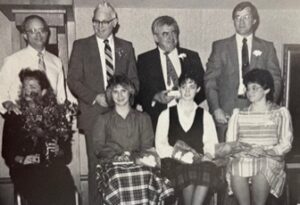
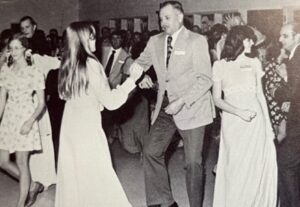
After the move to the Hilton Drive campus, the annual event became a more semiformal or a themed dinner and dance. During the 1970s and ’80s, dads and daughters voted for “King of the Dance”; now Pandas and their dads compete in contests for the best themed outfit or share new dance steps as they dance the night away.


Class/School Trips
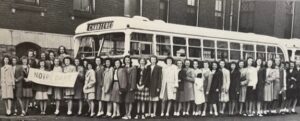
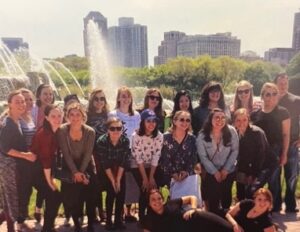
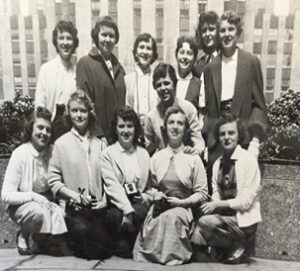
Knowing that the accumulation of knowledge is not only found within the four walls of the classroom, NDA has always promoted and sponsored excursions to historical, civic and religious sites in order to expand the horizons of her students. As early as the 1930s, class level trips were sponsored to Frankfort, New York City and Washington DC to give students insights into the identity, spirit and history of our country. In the 1980s, these trips were broadened to include travel to several European countries to explore the cultural identities which shape the world in which we live.
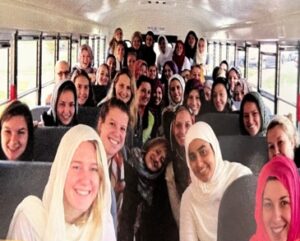
In 1974, students from NDA attended the first annual March for Life held in Washington, D.C. and continue to be active participants in this march centering on the right to life for all people. Beginning in the 1990s, class trips to Jewish temples and Muslim mosques help our students understand religious differences and similarities which build a better understanding of our world today.
Spring Spirit Days/Panda Prowl
Students at NDA are well known to celebrate every season of the school year, but Spring has always been special as it marked the celebration of the end of their high school days for the senior class, while for the underclasswomen it is a time of reflection and anticipation for the coming school year. From the earliest days on 5th Street, the end of the academic year was celebrated with Mass at Mother of God Church, followed by a brunch in the cafeteria and a program in the school auditorium. The program, hosted by the junior class, featured a “history of the senior class” (reminisces of their 4 years), tributes to members of the senior class emphasizing their nicknames, hobbies, favorite expressions and their favorite songs and a glimpse into their future by reading a “horoscope” of where each would be in 10 years. As a parting gift, the senior class would read their “last will and testament” gifting each class with a particular responsibility for the coming year, as well as giving individual members of the junior class with physical remembrances from that school year. Many times, these would include a required reading book from a senior level class, a locker, a gym uniform, etc.
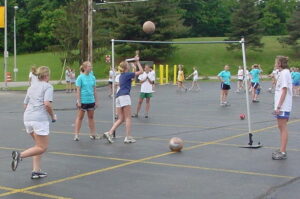
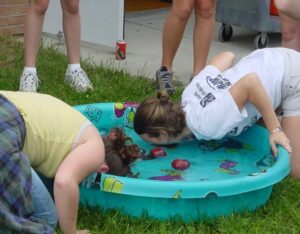
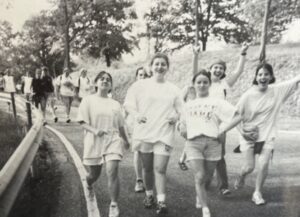
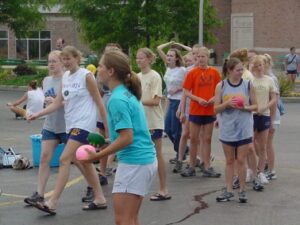
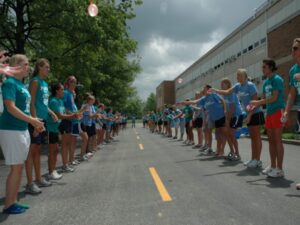
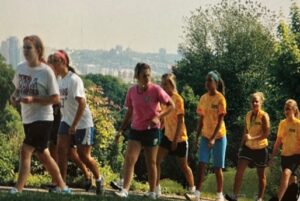
After the move to the new campus in the 1960s, end-of-the-year activities began to include talent shows and dances as well as outdoor “spirit days”, pairing students and faculty in friendly competitions followed by a picnic on school grounds. During the 1970s, students participated in a 12-mile walk-a-thon sponsored by GAA to raise funds for the athletic departments. Other years found the student body participating in “Panda Olympics” (competitions between grade levels), and the “Panda Prowl”, an entire student body walk from the NDA campus through Devou Park, followed by a catered picnic.

Cleaning Day
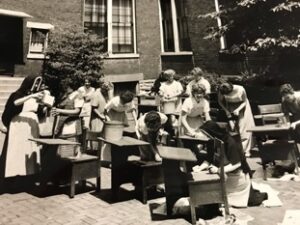
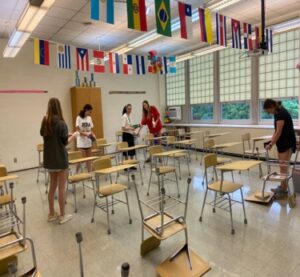
Starting in July 1953, novices from The Heights would spend the month of July cleaning desks, bookcases, and each classroom to get the building ready for the next academic year. During the 1960s and ’70s, the sisters on staff and the janitorial staff continued these duties, but with the growth of the student body and the additions to the facilities this task soon became overwhelming. In 1980, the administration asked the underclasswomen to take up this chore and thus a new end-of-the-year tradition was formed – “cleaning day”. And the tradition continues; after finishing exams in May, all returning students report to campus for one hour of service to help clean the building and get it ready for the upcoming year.
Finally, do you remember…….
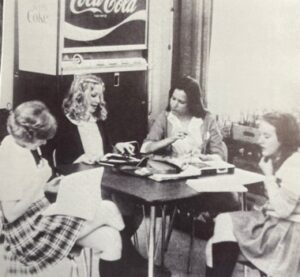
The senior lounge Coke machine?
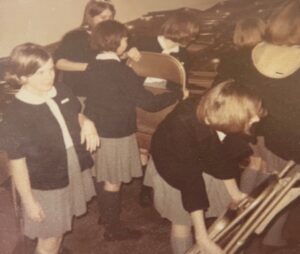
Stacking chairs after each assembly?
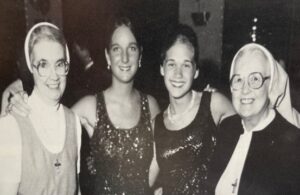
Pictures with your favorite faculty at prom?
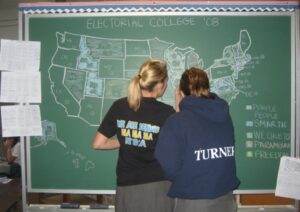
Mock Elections?

Spirit T-shirts?
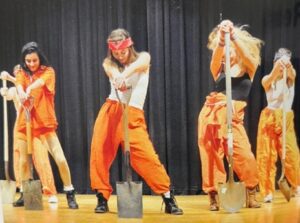
The Holes Dance at the Talent Show?
We hope these remembrances of faith formation and sisterhood traditions have sparked some memories of your days at NDA and rekindled that spirit of sisterhood that has been embraced from the first young women to cross over the doorstep on 5th Street to the most recent graduates who have moved on to new adventures. If you would like to share some of your memories, please send them to notredamian@ndapandas.org and we will make them available on the NDA Alumnae website. Looking forward, we will be remembering NDA traditions centering on academics, athletics and fine arts.